Aug 19, 2026
Complete Guide to Underfloor Heating Manifold Cabinets | Flush & Surface Mounted Solutions
Discover heavy-duty underfloor heating manifold cabinets designed for modern hydronic systems. Explore flush and surface-mounted galvanized steel enclosure boxes with key locks for optimal safety and
Ultimate Guide to Choosing the Best Underfloor Heating Manifold Cabinet
In modern hydronic radiant floor heating systems, the manifold serves as the central control hub, distributing hot water evenly across various heating zones. However, ensuring long-term system reliability, safety, and visual aesthetics requires more than just high-quality piping and valves—it requires a heavy-duty, professionally engineered underfloor heating manifold cabinet.
Whether you are an HVAC distributor, a building developer, or a heating contractor, selecting the right manifold enclosure box is essential for protecting sensitive components while maintaining easy access for routine maintenance.
What Is an Underfloor Heating Manifold Cabinet?
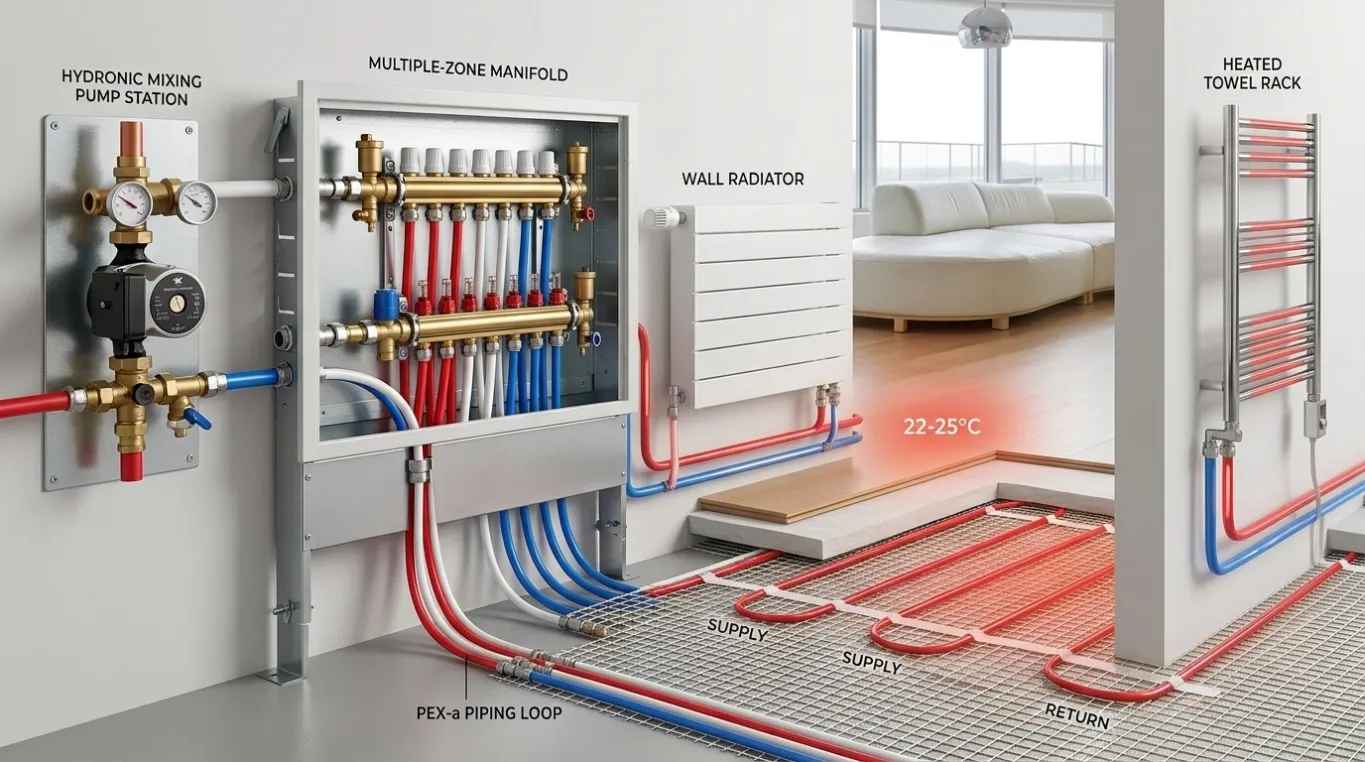
An underfloor heating manifold cabinet (also known as a manifold distribution box or heating enclosure) is a metal housing designed to safely accommodate water heating manifolds, mixing valves, circulation pumps, heat meters, and zone control actuators.
By concealing complex piping, electrical wiring, and pressure gauges behind a sleek, lockable panel, the manifold enclosure protects vital components from dust, moisture, physical impact, and unauthorized tampering.
Key Features of Professional Manifold Enclosures
When procuring manifold boxes for commercial or residential heating projects, look for the following structural features:
1. Robust Material Construction
High-quality cabinets are typically fabricated from premium galvanized steel sheet or powder-coated stainless steel. This provides superior corrosion resistance, high structural rigidity, and long service life even in humid environments like basements or utility rooms.
2. Flush-Mounted vs. Surface-Mounted Designs
Depending on the wall structure and architectural requirements, manifold cabinets come in two main structural formats:
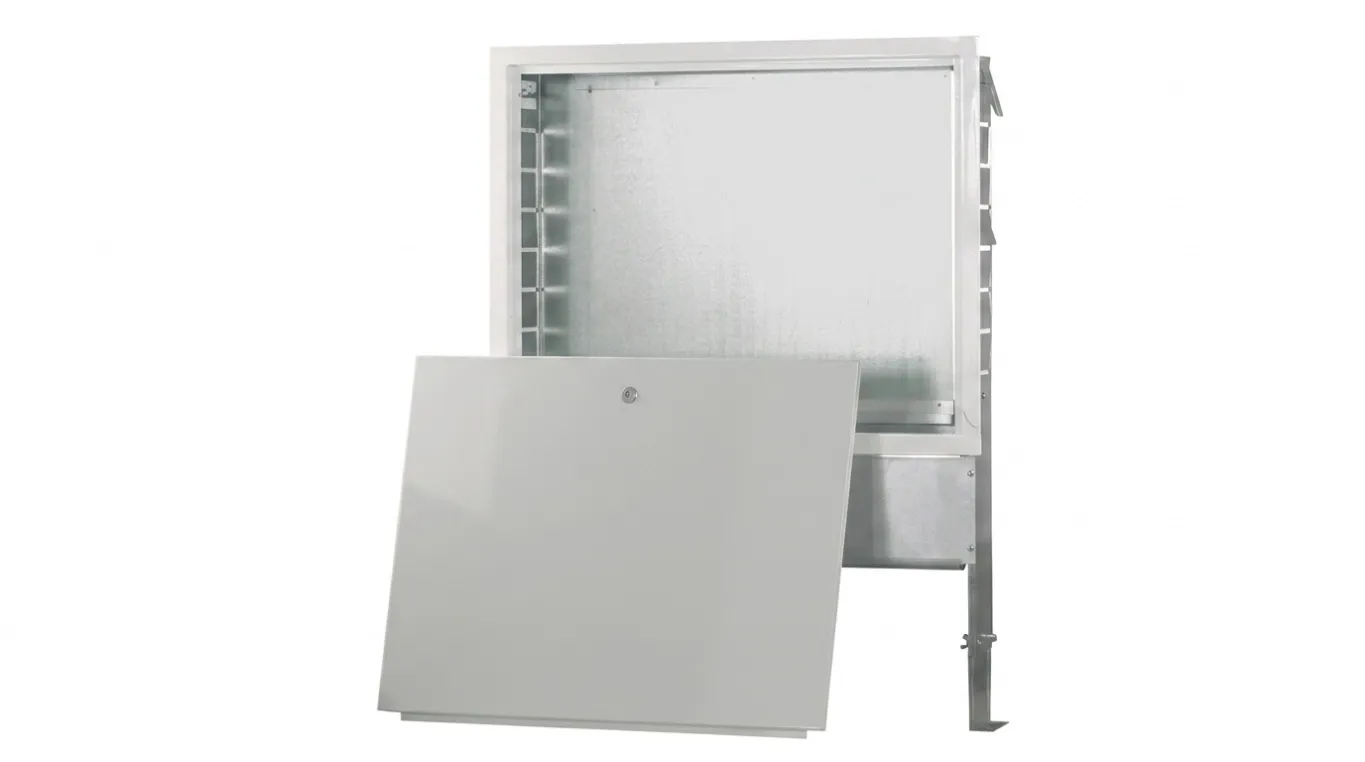
- Flush-Mounted (Concealed/In-Wall) Cabinets: Installed directly inside a wall niche. Equipped with adjustable side legs and a recessed frame, flush-mounted cabinets blend seamlessly into drywall or plaster walls, saving valuable floor space. (See product image below for an adjustable flush-mount model featuring removable front covers and key lock).
- Surface-Mounted (Wall-Hung) Cabinets: Mounted directly onto finished walls. Ideal for retrofit installations or renovation projects where wall cutting is restricted.
3. Adjustable Height & Depth
Flexible installation is critical on real-world construction sites. Premium manifold enclosure boxes feature adjustable mounting feet (height adjustment up to 100–150 mm) and sliding internal mounting rails to easily accommodate various manifold sizes, loop counts, and pump mixing sets.
4. Lockable Front Doors & Quick Maintenance Access
Safety is paramount in both residential and public buildings. Modern cabinets feature removable or hinged front doors equipped with coin locks or key-operated cylinder locks. Removable doors offer installers 360-degree clear access during pressure testing, flushing, and routine maintenance.
Main Benefits of Installing a Quality Manifold Box
- System Protection: Keeps sensitive zone actuators, electric control wiring, and temperature valves safe from debris, dust, and water splashes.
- Space Saving & Clean Aesthetics: Converts cluttered hydronic piping into a tidy, professional installation hidden behind a clean white or metallic finish.
- Noise Dampening: Modern powder-coated steel enclosures help dampen operational noise generated by circulation pumps and mixing valves.
- Simplified Maintenance: Provides a single, centralized access point for temperature monitoring, air venting, and flow balancing.
How to Choose the Right Size Manifold Cabinet
Choosing the correct enclosure size depends on several key parameters:
- Number of Heating Circuits (Loops): A 2-to-4 loop manifold requires a compact cabinet (around 450–600 mm width), whereas a large 10-to-12 loop manifold with a pump unit requires a wider box (up to 1000–1200 mm width).
- Depth Requirements: Standard depth ranges from 110 mm to 160 mm. Ensure the cabinet depth accommodates the depth of mixing pump units and motorized actuators.
- Inlet/Outlet Pipe Clearance: Verify that the side knockout holes or pipe cutouts align with your supply and return lines.
Partner with a Trusted Manifold Cabinet Manufacturer
As a specialized manufacturer of OEM/ODM heating accessories and HVAC distribution enclosures, we provide full customization options including:
- Custom dimensions (Width, Height, Depth)
- Powder coating options (RAL color matching)
- Custom side pipe entry knockouts and bracket configurations
- Private labeling and bulk packaging for international distributors
Contact our engineering team today to request a catalog, technical specifications, or a competitive factory-direct quote for your next hydronic heating project.